
Cleaning your car isn’t just about removing dirt—it’s about protecting the paint, preserving your investment, and maintaining that showroom-quality finish. Whether you’re a weekend enthusiast who loves seeing water bead up on freshly waxed paint or a pro detailer with a mobile rig, the right pressure washer can completely transform the way you clean your car.
With countless options flooding the market—from compact electric units that fit on a shelf to powerful gas machines that could strip paint off a fence—choosing the best one can feel overwhelming. That’s why we’ve created this comprehensive guide to help you find the top best pressure washer for car detailing in 2026. We will dive deep into power metrics, safety protocols, essential features, and the best value picks to ensure you make the right choice for your ride.
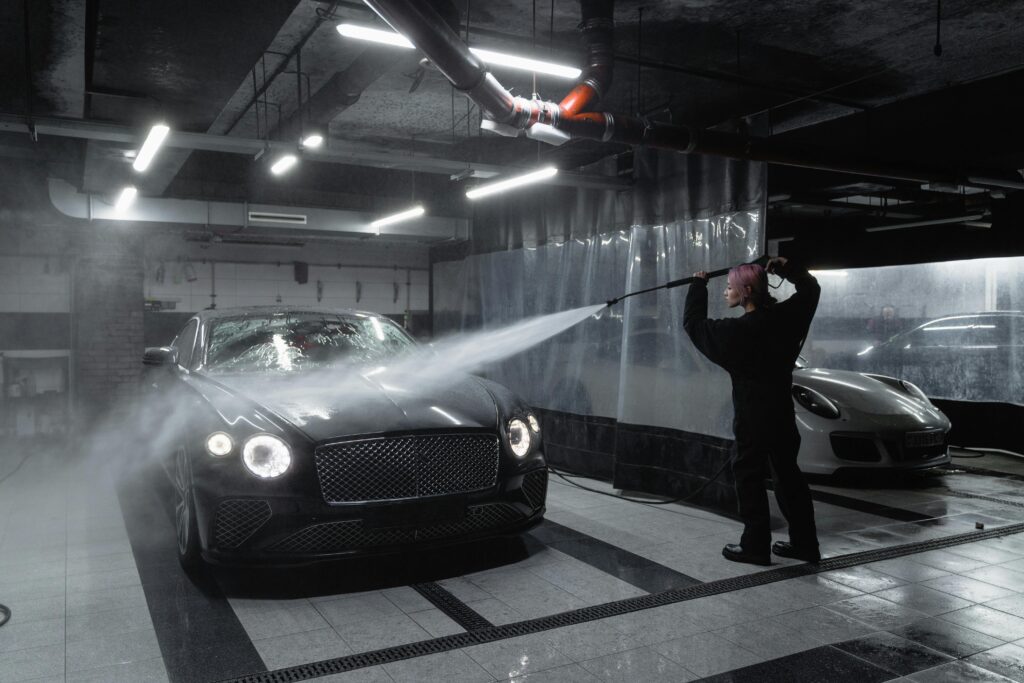
Why Use a Best Pressure Washer for Car Detailing?
If you are still using a standard garden hose with a thumb over the nozzle, you are missing out on a safer, faster, and more effective wash process. A garden hose simply doesn’t cut it when it comes to tough grime, brake dust, corrosive road salt, or dried mud caked inside wheel wells.
A quality pressure washer offers several distinct advantages over traditional washing methods:
Effortless Dirt Removal: High-pressure water dislodges abrasive particles that a sponge might drag across the paint, reducing swirl marks.
Drastically Reduced Wash Time: What used to take an hour with a bucket and hose can be done in 20 minutes with high pressure.
Optimized Foam Cannon Performance: To get that thick, shaving-cream style foam that clings to the car and lifts dirt, you need the consistent pressure only a machine can provide.
Paint Protection: By blasting away the heavy grit before you ever touch the car with a wash mitt, you minimize the risk of scratching the clear coat.
Professional-Level Finish: It allows you to clean areas a hose can’t reach effectively, like undercarriages and tight wheel spokes.
Most importantly, the right pressure washer cleans effectively without damaging your car’s paint, which is the golden rule of proper detailing.
Key Features of the Best Pressure Washers for Car Detailing
When shopping for a pressure washer specifically for automotive use, you aren’t looking for the same specs you’d use to clean a concrete driveway. You need a balance of power and gentleness. Here are the essential features to scrutinize:
1. Ideal PSI (Pounds per Square Inch)
PSI measures the force of the water coming out of the tip. For cleaning concrete, you might want 3,000+ PSI. For cars, that is dangerous.
The Sweet Spot: Stick to 1,200–2,000 PSI. This range provides enough force to knock off bug splatters and dried mud but is gentle enough that it won’t peel your clear coat or damage rubber seals.
Why it matters: Excessive pressure can lift paint chips, damage decals, and force water into electronic components where it shouldn’t go.
2. GPM (Gallons Per Minute)
While PSI is the “punch,” GPM is the “flow.” It measures the volume of water used.
The Sweet Spot: A GPM of 1.4–2.0 is ideal for detailing.
Why it matters: Higher water flow flushes away the dirt you’ve just loosened. A machine with high PSI but low GPM feels like cleaning with a laser pointer—it takes forever. A higher GPM helps rinse suds faster and makes the foam cannon produce thicker foam.
3. Foam Cannon Compatibility
The ability to attach a foam cannon is non-negotiable for modern detailing.
What to look for: Ensure the wand uses standard 1/4-inch Quick Connect fittings. Proprietary fittings (common on some budget brands) make it difficult to upgrade to a high-quality aftermarket foam cannon later.
4. Nozzle Options
You need versatility. A single “adjustable” wand is often less reliable than dedicated nozzle tips. Look for machines that come with:
40° Nozzle (White): The safest wide fan for rinsing body panels.
25° Nozzle (Green): Good for wheels and heavy grime, but use with caution on paint.
Soap Nozzle (Black): Low pressure for applying detergent (though a foam cannon is better).
5. Hose Length and Quality
The hose is often the biggest frustration point.
Length: A 20–25 ft hose is the minimum to get around a sedan without moving the machine. A 50 ft hose allows you to walk around a large truck or SUV freely.
Material: Look for flexible, abrasion-resistant rubber hoses rather than stiff plastic ones that constantly kink and wrestle you during the wash.
Gas or Electric Pressure Washer: Which Is Better?
This is the most common debate among buyers. While gas engines are powerful workhorses, they aren’t always the right tool for the delicate job of car detailing.
Electric Pressure Washers (The Winner for Cars)
Electric units are the industry standard for auto detailing for several reasons:
Instant Start/Stop: The motor stops when you let go of the trigger. This “Total Stop System” (TSS) saves energy and reduces noise.
Consistent Pressure: They deliver steady pressure that is easier to regulate for safe paint cleaning.
Low Maintenance: No oil changes, spark plugs, or carburetor cleaning. Just plug it in and go.
Compact & Quiet: You can use them early in the morning without waking the neighbors.
Cost-Effective: You can get a fantastic setup for under $200.
Gas Pressure Washers (Proceed with Caution)
Gas units have their place, but usually not in the driveway for a car wash.
Overkill Power: Many start at 2,500 PSI, which is risky for automotive paint.
Loud & Heavy: They run constantly, are heavy to move, and create exhaust fumes (no indoor use).
Maintenance Heavy: Like a lawnmower, they require engine maintenance and fuel stabilization.
Cost: Quality units start at $300–$400.
Verdict: For car detailing, stick to electric pressure washers. They offer the perfect balance of power, convenience, and safety.
PSI & GPM Recommendations for Car Washing
Understanding the relationship between pressure and flow is key to efficient cleaning. Here is a breakdown of what you need for specific tasks:
Task
Recommended PSI
Recommended GPM
Why?
Pre-rinse
1,200–1,500
1.2–1.5
Gently wets the surface and removes loose dust without grinding it into the paint.
Deep cleaning
1,500–2,000
1.5–2.0
Removes stuck-on bugs, bird droppings, and road tar.
Wheels & tires
Up to 2,000
2.0
Brake dust is stubborn; wheels can handle slightly higher pressure than paint.
Engine Bay
1,000–1,200
1.2
Low pressure is critical here to avoid forcing water into sensitive electronics or intakes.
⚠️ Critical Warning: Avoid using pressure washers exceeding 2,200 PSI on car paint. If you have a powerful machine, stand further back to lower the effective pressure hitting the surface.
Top Picks: Best Pressure Washers for Car Detailing (2026)
We have tested and analyzed market leaders to bring you the best machines for every budget and skill level.
1. Sun Joe SPX3000 – Best Overall
Specs: 2,030 PSI, 1.76 GPM
Why we love it: It strikes the perfect balance between price and performance. The dual detergent tanks are handy, and the Total Stop System prolongs pump life. It is the most popular unit for a reason—it just works.
Best for: The weekend warrior who wants a reliable, all-around machine.
2. Greenworks Pro 2000 PSI – Most Durable
Specs: 2,000 PSI, 1.2 GPM
Why we love it: It features a brushless motor and a smart-sensing technology that adjusts pressure. The open-frame design is rugged, and the 25-ft hose is higher quality than most competitors.
Best for: Someone who wants a machine that feels sturdy and will last for years.
3. Ryobi 1900 PSI Electric – Best for Beginners
Specs: 1,900 PSI, 1.2 GPM
Why we love it: It is incredibly lightweight, compact, and affordable. If you have limited garage storage, this tiny unit tucks away easily but still packs enough punch for a good wash.
Best for: First-time buyers and those with limited storage space.
4. Karcher K1700 – Best for Customization
Specs: 1,700 PSI, 1.2 GPM
Why we love it: Designed with detailers in mind, it has standard fittings that make upgrading hoses and guns easy. The foot-pedal on/off switch is a brilliant ergonomic touch.
Best for: Enthusiasts who plan to upgrade their gun and hose later.
5. Active VE52 – Best for Professionals
Specs: 1,800 PSI, 2.0 GPM
Why we love it: The high GPM (2.0) is the star here. It rinses incredibly fast and produces massive amounts of foam. It sacrifices some pressure for flow, which is exactly what professional detailers prefer.
Best for: Dedicated detailers who prioritize water flow and speed.
Boost Performance with the Right Foam Cannon
Your pressure washer is only half the equation. To get that snow-covered look, you need a foam cannon.
MTM Hydro PF22.2 (Professional-grade): The gold standard. It features an adjustable fan blade (vertical or horizontal) and a weighted intake tube so you can spray at any angle.
Twinkle Star Foam Cannon (Budget-friendly): A solid entry-level option that gets the job done for a fraction of the price.
Chemical Guys Big Mouth (Mid-range): Known for a wide neck that makes filling the bottle easy without spilling soap everywhere.
Pro Tip: Always use warm water in your foam cannon bottle and mix it with a high-quality, pH-neutral car shampoo. This creates thicker suds than cold water.
Common Mistakes to Avoid When Pressure Washing
Even with the best equipment, bad technique can ruin a detail job. Avoid these common pitfalls:
Getting Too Close: This is the #1 cause of damage. Holding the nozzle 2 inches from the paint acts like a sandblaster. Keep a safe distance of 12–18 inches.
Using the Wrong Nozzle: Never, ever use the Red (0°) nozzle on a car. It concentrates the water into a needle-point stream that can slice through rubber and chip paint instantly. Throw the red nozzle away or hide it.
Ignoring the Undercarriage: Salt and road grime accumulate underneath your car, leading to rust. Don’t forget to spray underneath the bumpers and side skirts.
Washing in Direct Sunlight: Pressure washing in the hot sun causes water and soap to dry rapidly, leaving behind stubborn water spots that are hard to remove. Always wash in the shade or on a cloudy day.
Forgetting to Purge the Line: Before turning the machine on, squeeze the trigger to let water flow through. This removes air pockets that can cause “water hammer” and damage the pump.
Pressure Washer Safety Tips for Car Detailing
Safety isn’t just about the car; it’s about you, too.
Wear Closed-Toe Shoes: A high-pressure jet can easily lacerate skin. Never pressure wash in flip-flops.
Protect Your Eyes: Debris can fly back at you when spraying wheels. Safety glasses are a smart idea.
Watch the Electrical: Ensure your extension cord is rated for outdoor use and keep the connection point dry.
Avoid Badges and Decals: Don’t spray directly at the edges of vinyl decals or glued-on badges, as the pressure can lift them. Spray at a 90-degree angle to the surface, not against the edge.
FAQ: Frequently Asked Questions
Q: Can I use a pressure washer on a convertible soft top?
A: Proceed with extreme caution. The high pressure can force water through the fabric weave or damage the waterproofing layer. It is generally safer to rinse convertible tops with a gentle spray from a standard garden hose. If you must use a pressure washer, stand at least 3-4 feet away and use a wide fan nozzle (40°).
Q: What is the best way to store a pressure washer?
A: If you live in a climate that freezes, this is critical. You must winterize your machine. Use a “pump saver” fluid (available at hardware stores) to flush out the water and lubricate the seals. Store the machine indoors (garage or basement) where temperatures stay above freezing. Frozen water inside the pump will crack the manifold.
Q: Can I use dish soap in my foam cannon?
A: You can, but you shouldn’t. Dish soap is designed to strip grease, which means it will also strip away any wax or sealant protection on your paint. Always use a dedicated car wash soap that is pH-neutral.
Q: Is a higher PSI always better?
A: No. For cleaning concrete, yes. For cars, no. Anything over 2,500 PSI increases the risk of damage without adding much cleaning benefit. Water volume (GPM) is more important for rinsing cars than raw pressure (PSI).
Final Verdict: Best Pressure Washers for Car Detailing (2026)
Choosing the right tool is the first step toward a professional-grade detail.
The “Buy It For Life” Choice: If durability is your main concern, the Greenworks Pro 2000 or Karcher K1700 offers robust build quality.
The Professional Choice: If you want the best performance and thickest foam, the Active VE52 is unbeatable due to its high water flow.
The Value King: For most homeowners, the Sun Joe SPX3000 remains the champion of value and reliability.
Pairing a quality electric pressure washer with a foam cannon is the safest, most efficient, and frankly, the most fun way to wash your car. It turns a chore into a satisfying maintenance ritual that keeps your vehicle looking brand new for years to come.
Best Pressure Washer for Car Detailing 2026: The Ultimate Guide
Looking for the best pressure washer for car detailing? We review top electric models, compare PSI vs GPM, and share pro tips for a safe, scratch-free wash.